 Mantodea.lab
Named for the man who spotted it
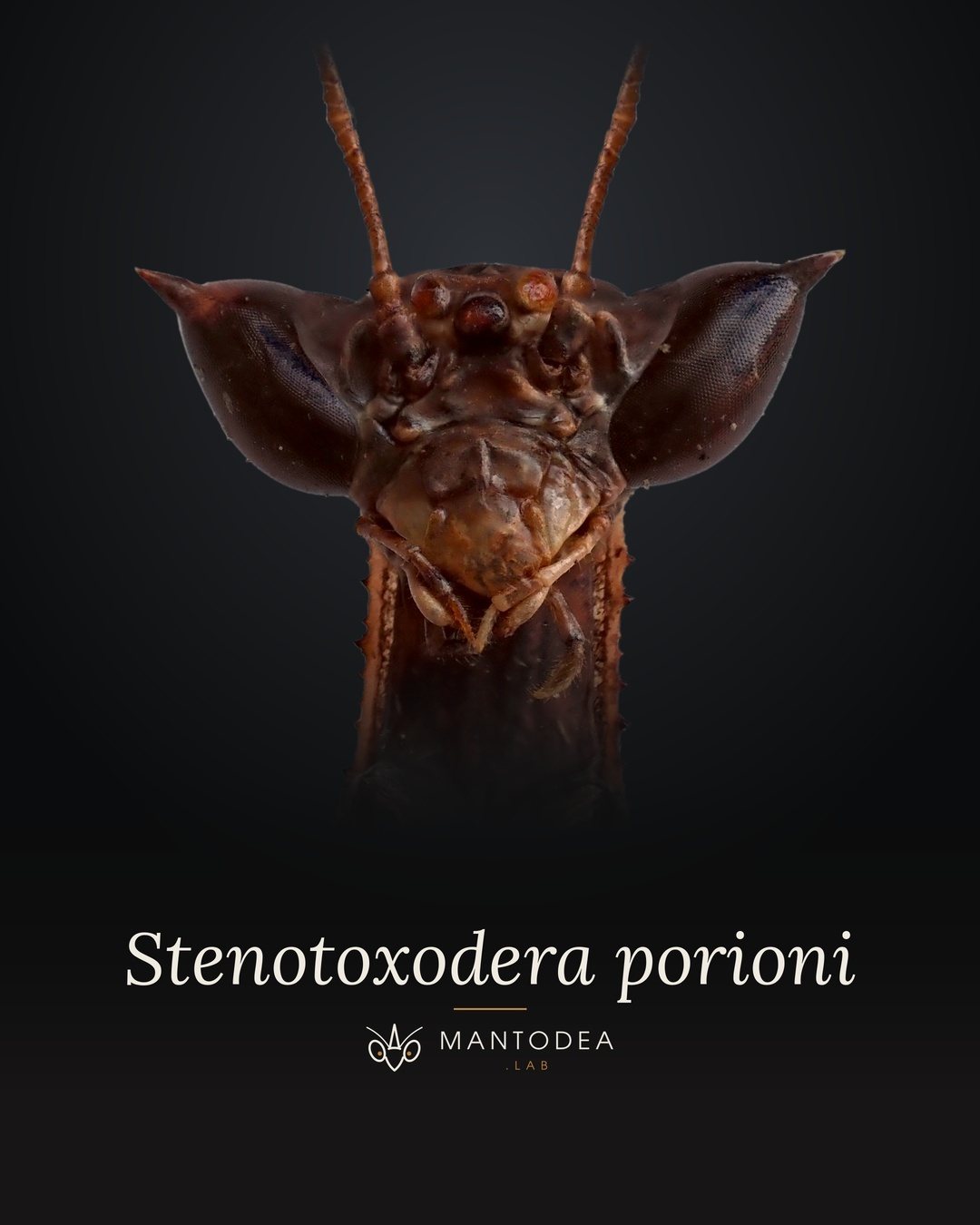
Roger Roy described it in 2009, in the same revision in which he created the genus Stenotoxodera. The holotype is a male from the Cameron Highlands, West Malaysia, kept in the Paris museum; the paratypes came from the Cameron Highlands, Sabah and East Java. Roy dedicated it to Thierry Porion, an amateur entomologist who first drew his attention to it as distinct from S. pluto.
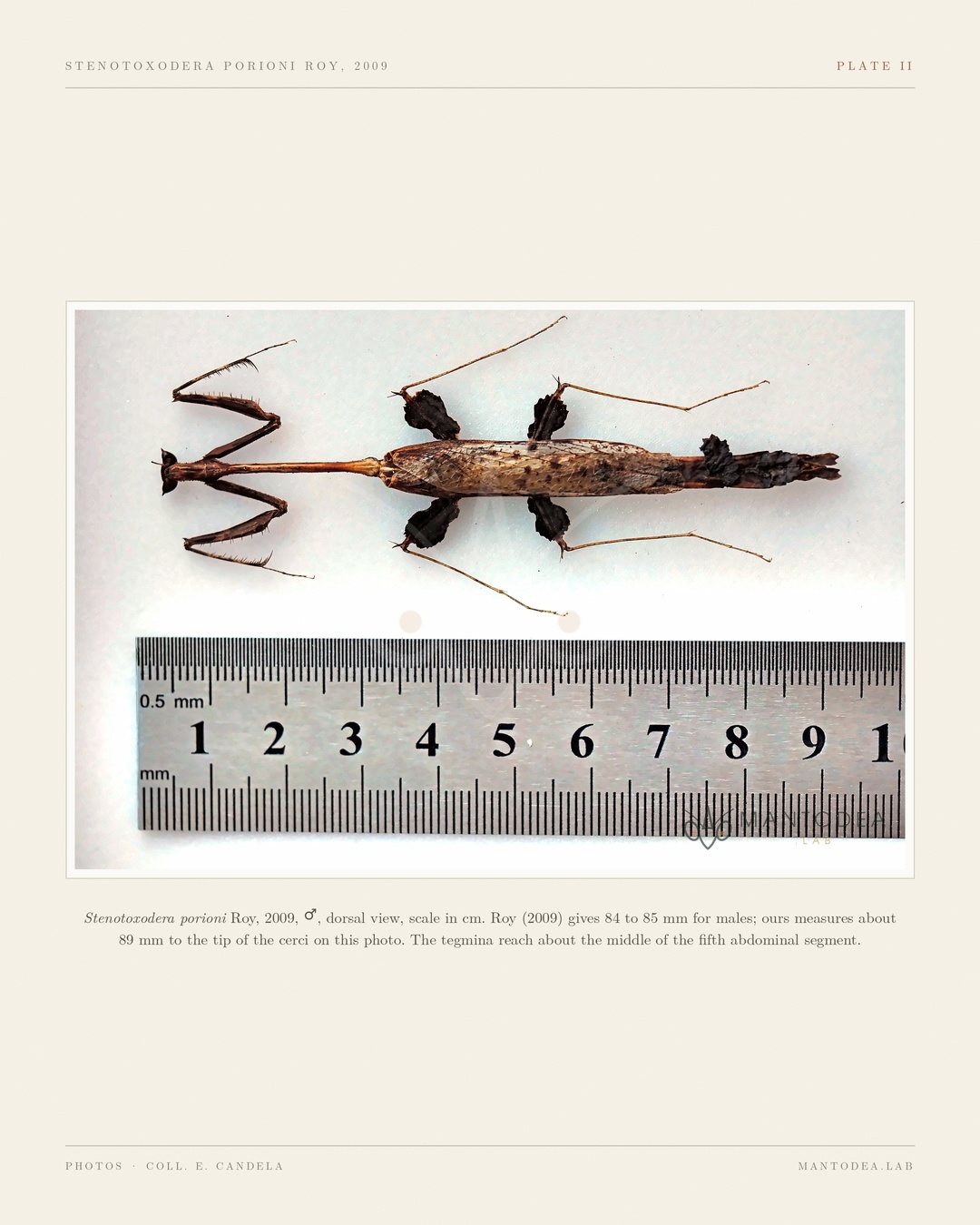
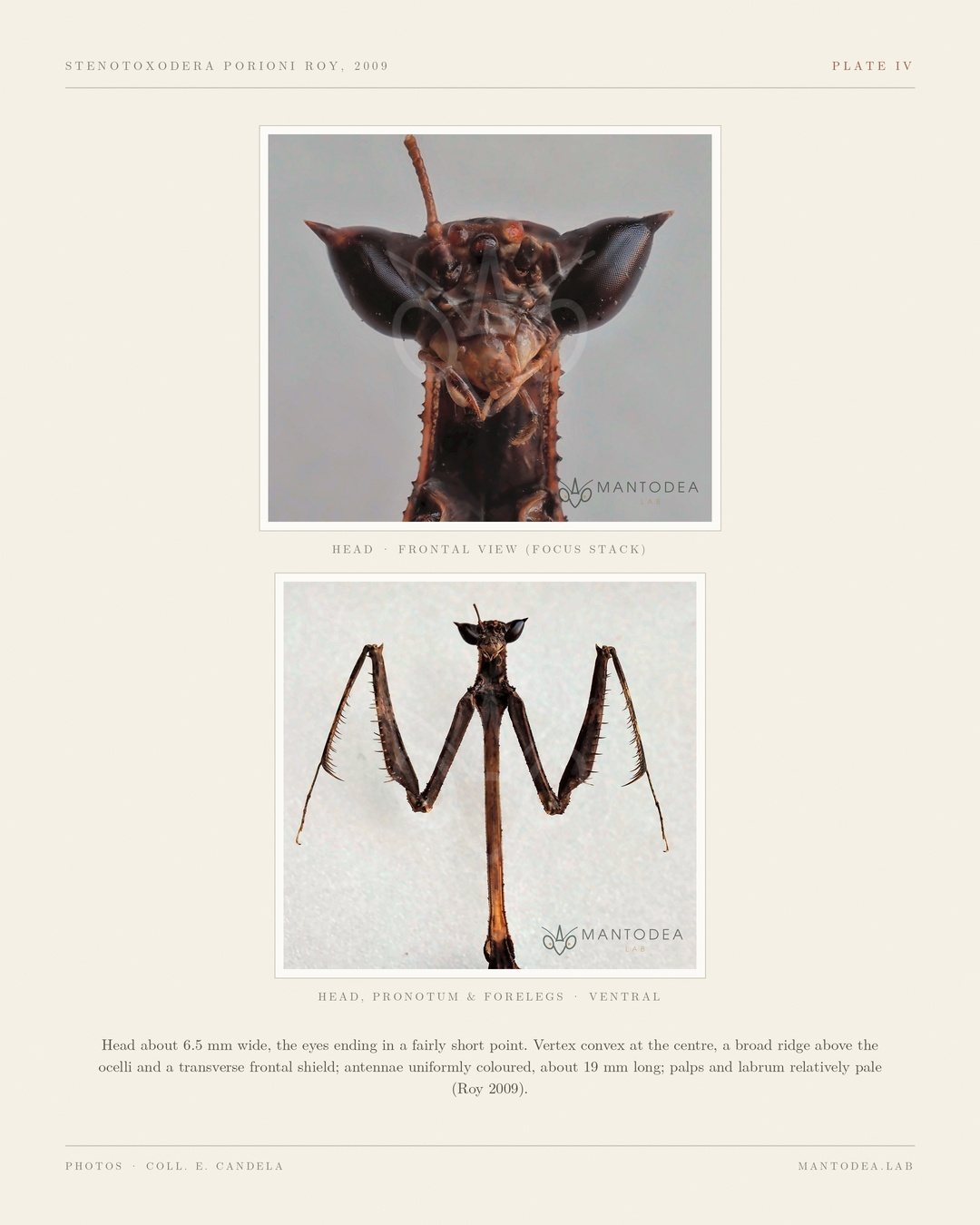
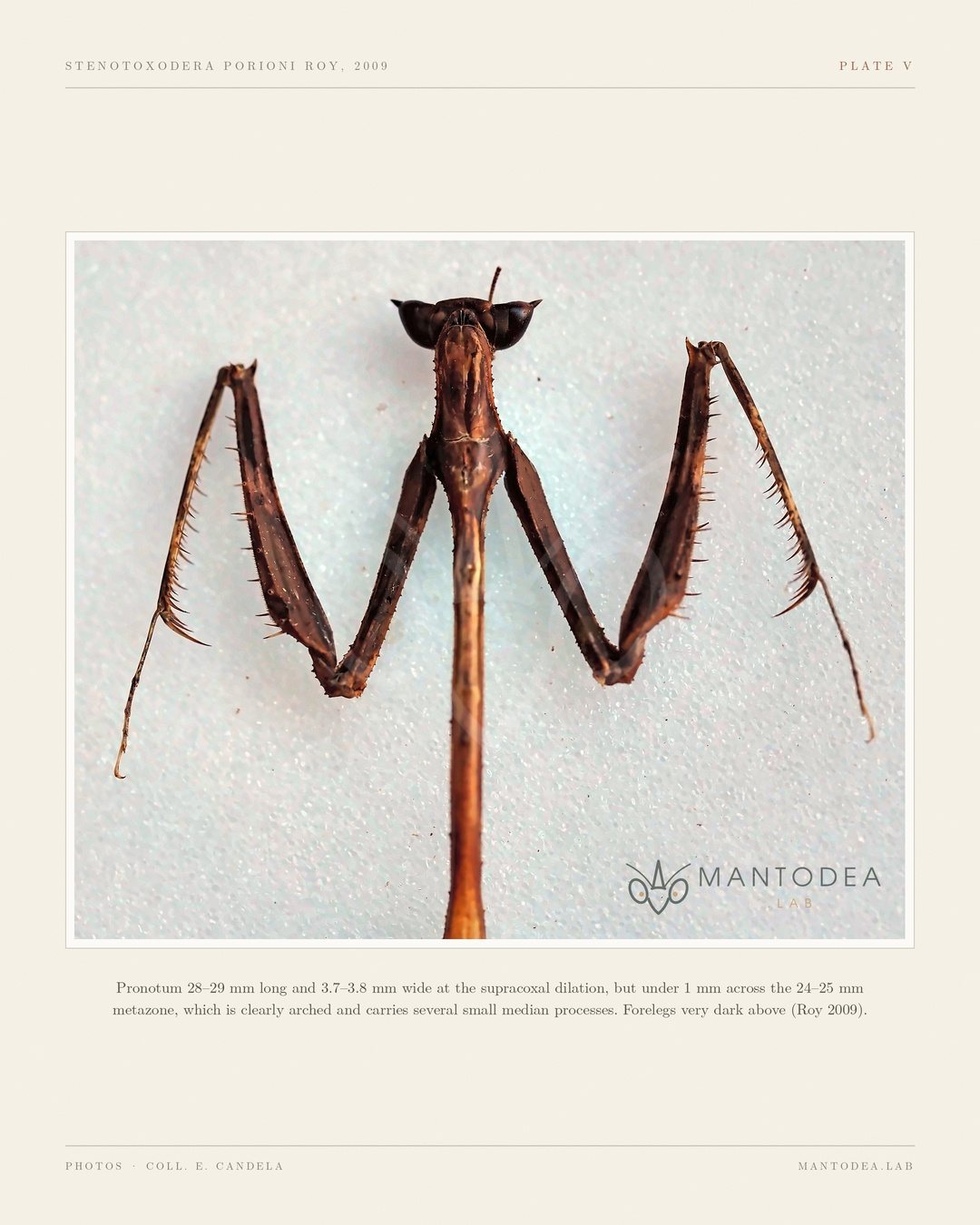
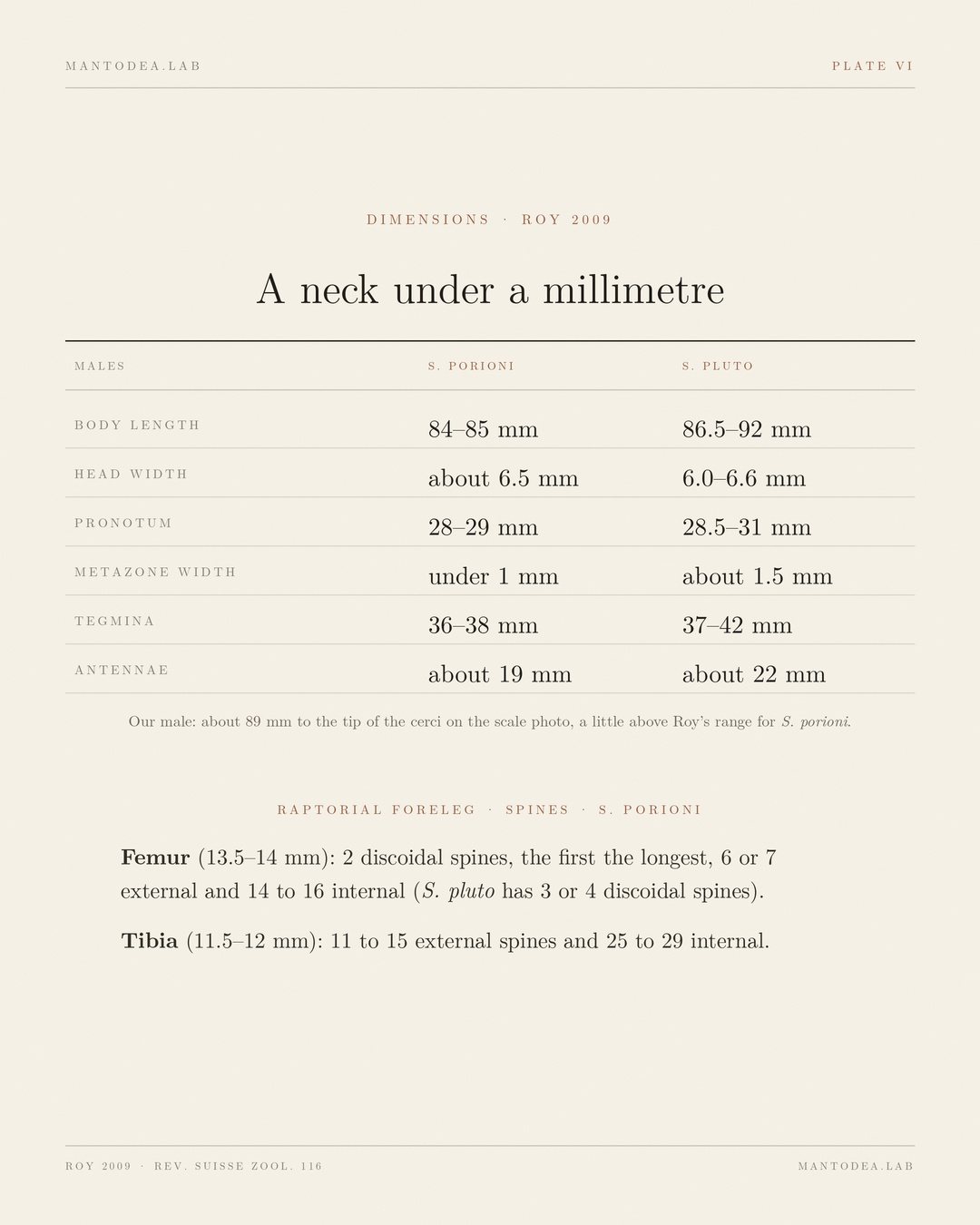
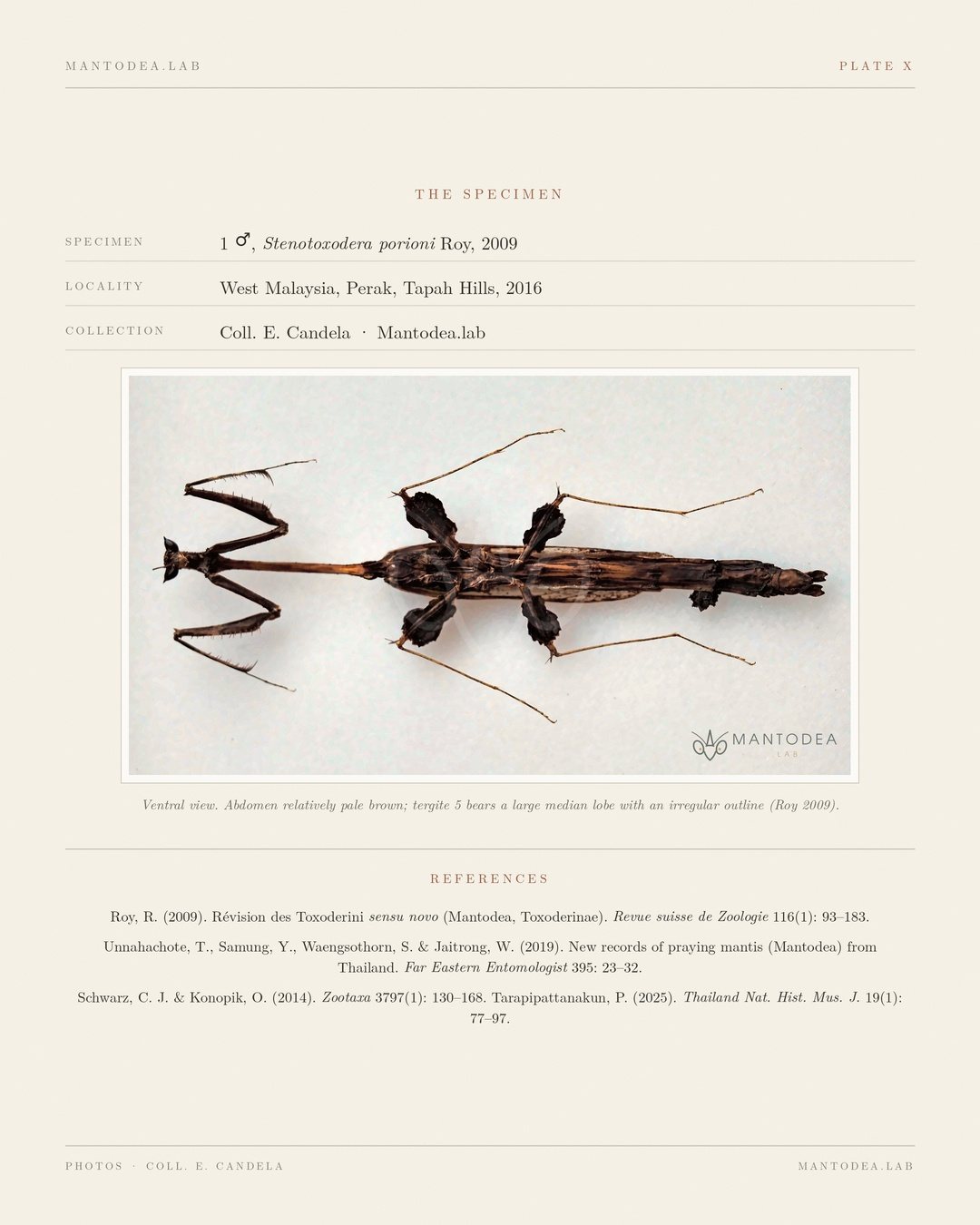
According to Roy (2009), males measure 84-85 mm, with a 28-29 mm pronotum that narrows to under 1 mm across the metazone, and 36-38 mm tegmina. The male in these plates measures about 89 mm to the tip of the cerci on the scale photo. Only males are known: Roy (2009) lists the female as still unknown.
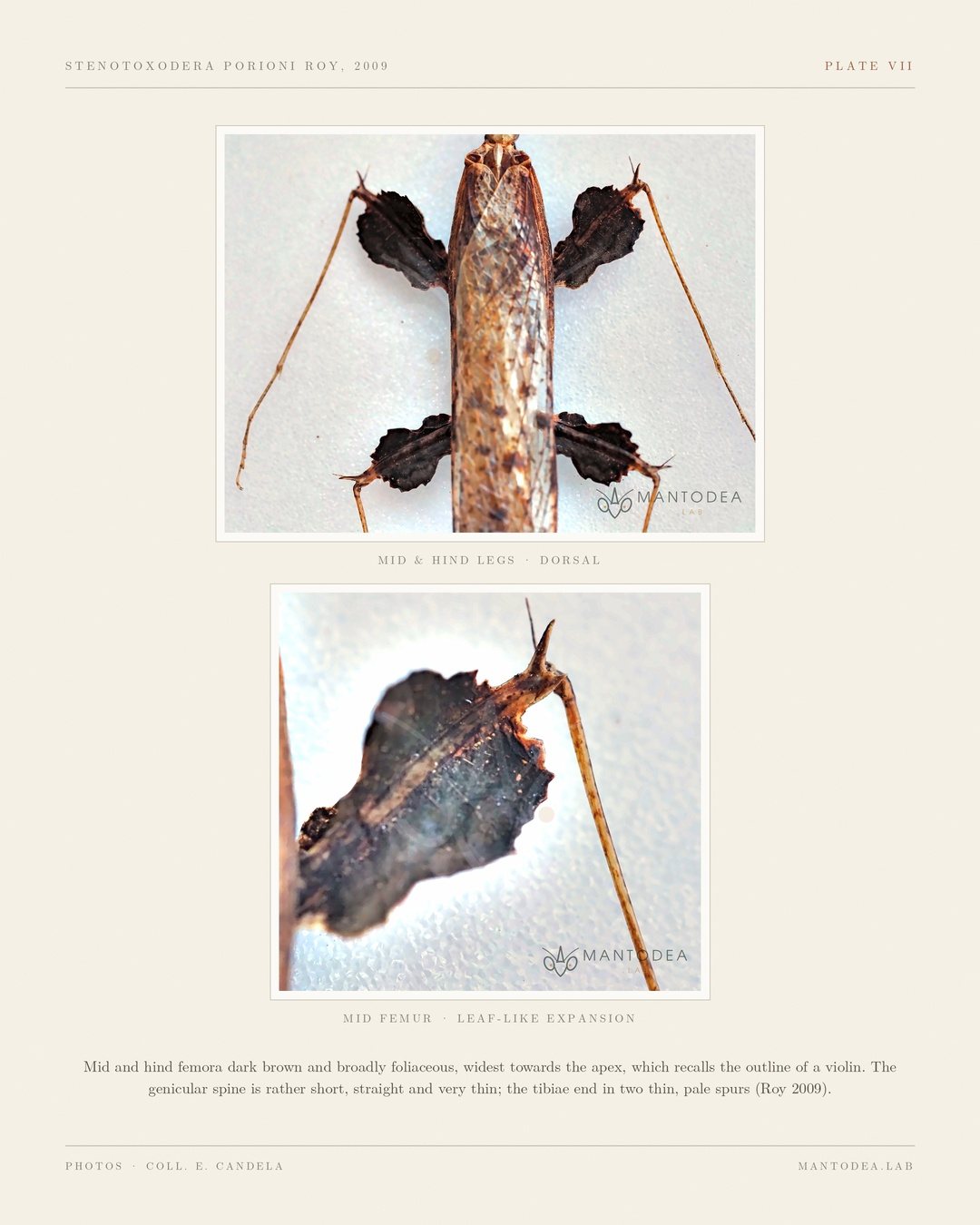
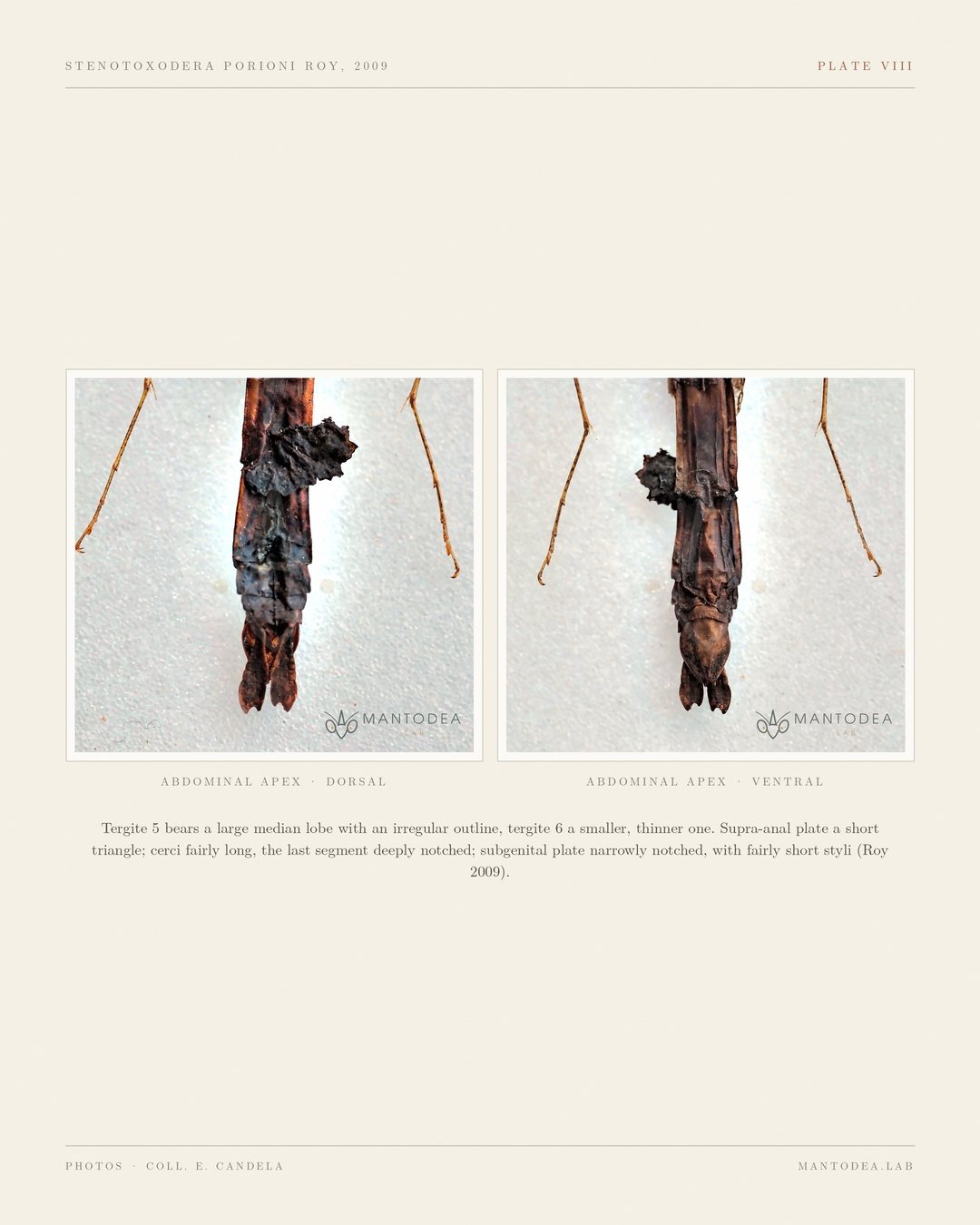
How to tell it from S. pluto, the only other species of the genus: the neck is the same, the legs are not. S. porioni has dark, violin-shaped femoral expansions, narrowed in the middle and widest beyond it; thin, straight genicular spines; long cerci with a deeply notched last segment; and 2 discoidal spines on the fore femur. S. pluto has pale expansions with no narrowing, very long curved genicular spines, short widened cerci and 3 or 4 discoidal spines.
Range: West Malaysia, Sabah and East Java (Roy 2009), and Nakhon Si Thammarat, southern Thailand (Unnahachote et al. 2019; Tarapipattanakun 2025). A stick mimic of old-growth forest understorey (Schwarz & Konopik 2014). The male in these plates comes from my collection and was taken at Tapah Hills, Perak, West Malaysia, in 2016.
Have you ever seen a female of Stenotoxodera? Write to me at hola@mantodealab.com or on Instagram.
Plates
References
Photos and specimen: coll. E. Candela. Roy, R. (2009). Révision des Toxoderini sensu novo (Mantodea, Toxoderinae). Revue suisse de Zoologie 116(1): 93-183. Unnahachote, T., Samung, Y., Waengsothorn, S. & Jaitrong, W. (2019). New records of praying mantis (Mantodea) from Thailand. Far Eastern Entomologist 395: 23-32. Tarapipattanakun, P. (2025). Thailand Natural History Museum Journal 19(1): 77-97. Schwarz, C. J. & Konopik, O. (2014). Zootaxa 3797(1): 130-168.
← Back to Mantodea.lab