 Mantodea.lab
Many spines
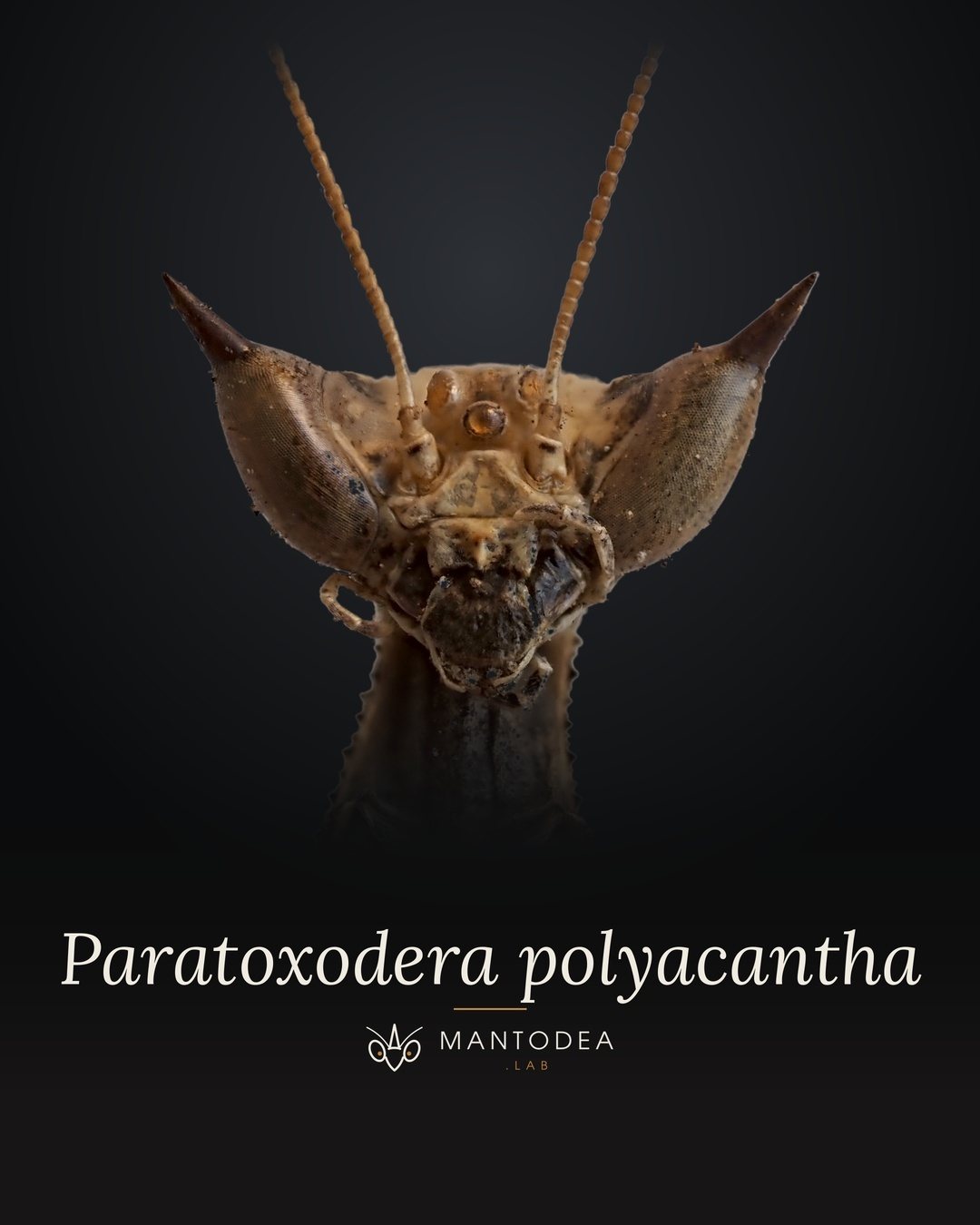
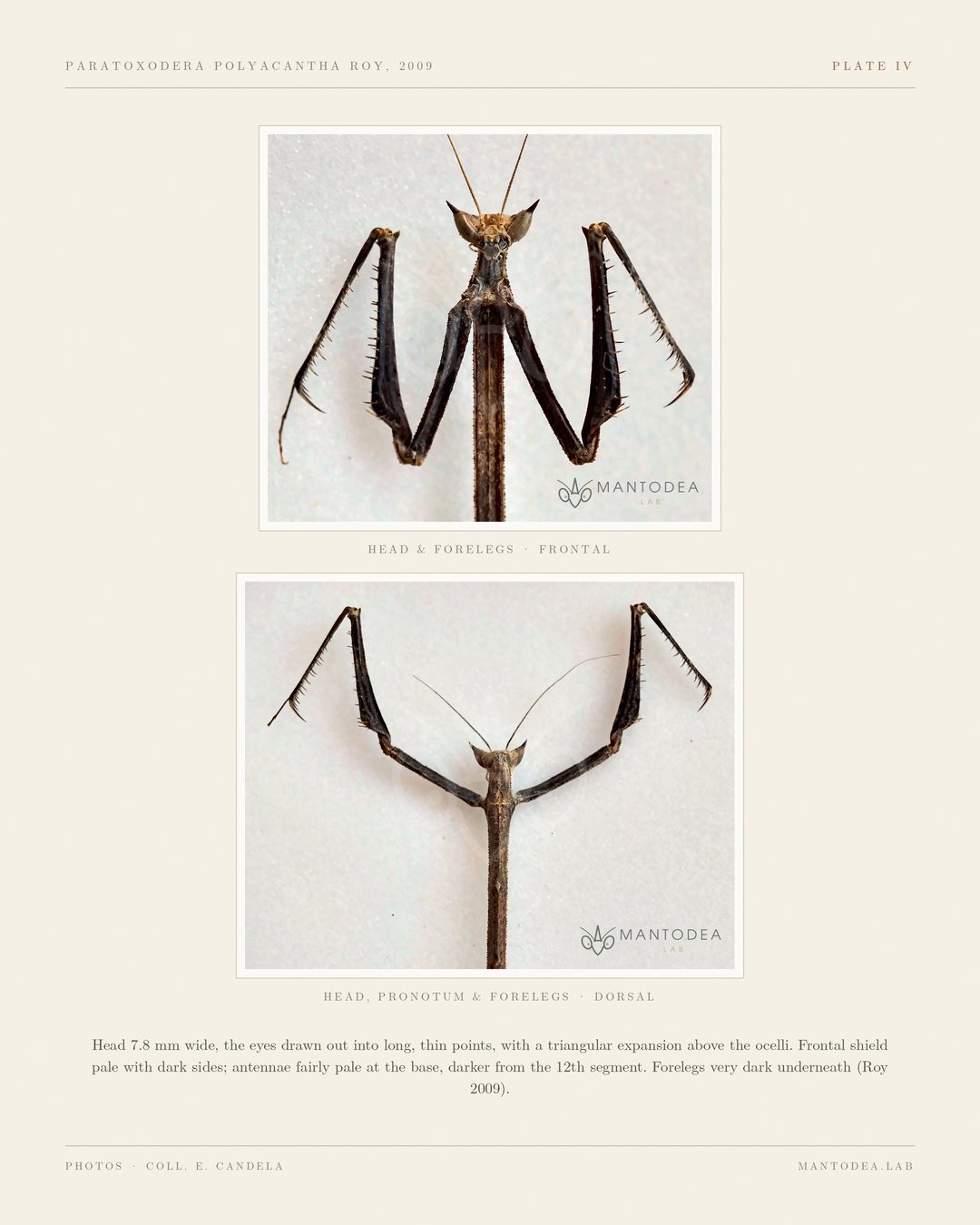
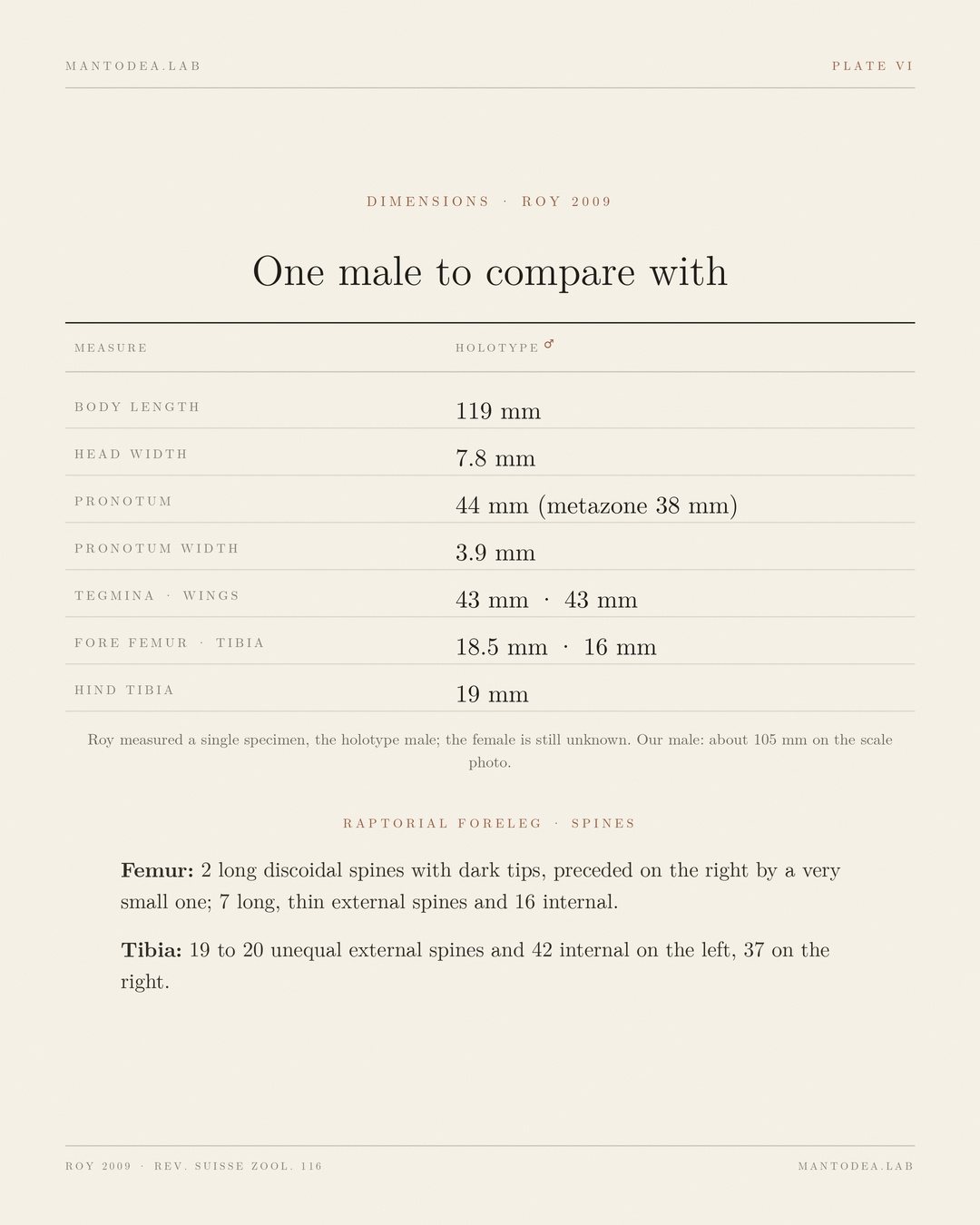
Roger Roy described this species in 2009 from a single male collected in 1973 in the Sandakan district of Sabah, Borneo, and kept in the Natural History Museum, London. It was the only specimen he knew, and the female has not yet been described. The name means “many spines”: the fore tibiae carry more than 40 internal spines (42 on the left and 37 on the right in the holotype), which Roy calls exceptional for a mantis.
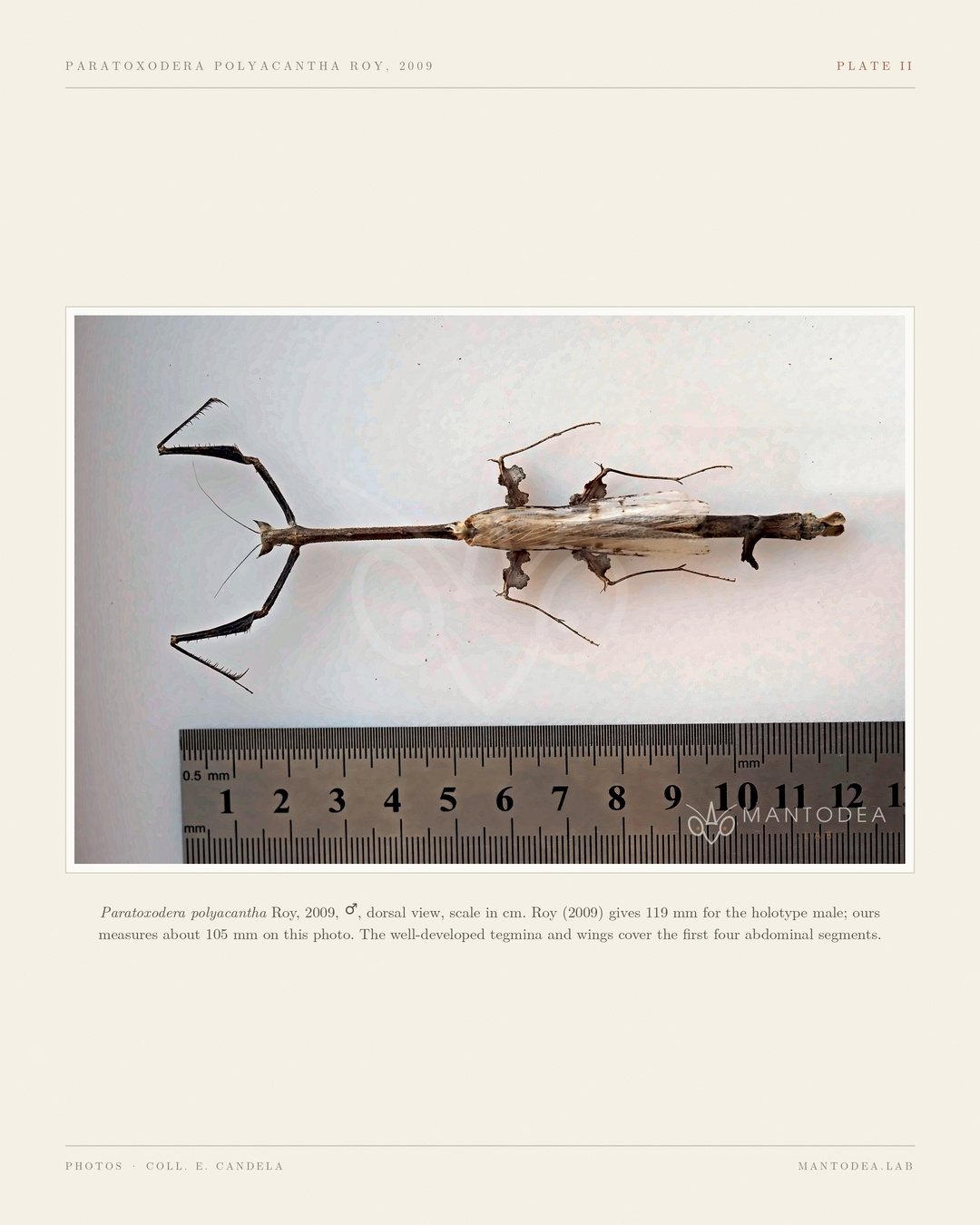
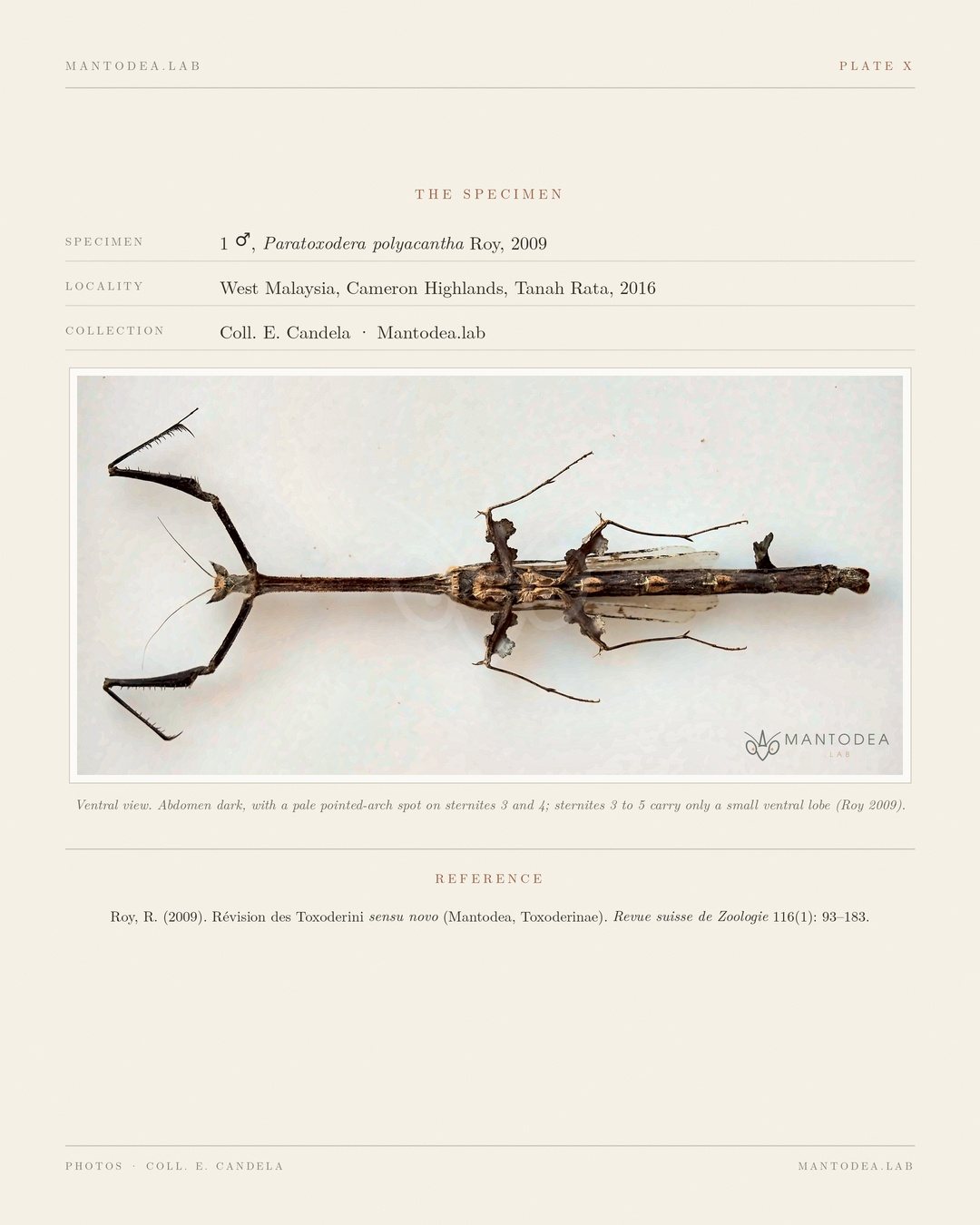
According to Roy (2009), the holotype measures 119 mm, with a 7.8 mm wide head, a 44 mm pronotum and 43 mm tegmina and wings. The male in these plates measures about 105 mm on the scale photo.
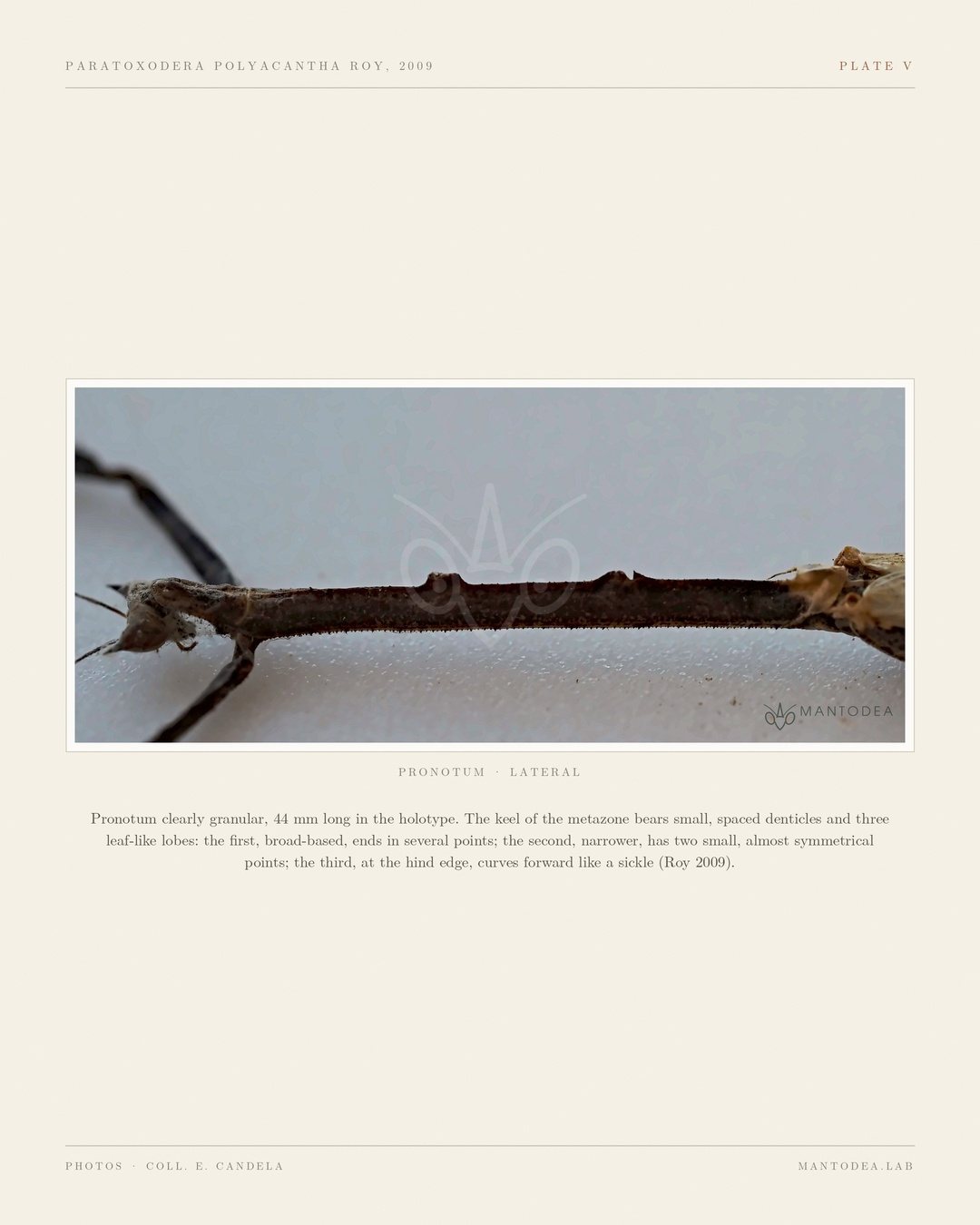
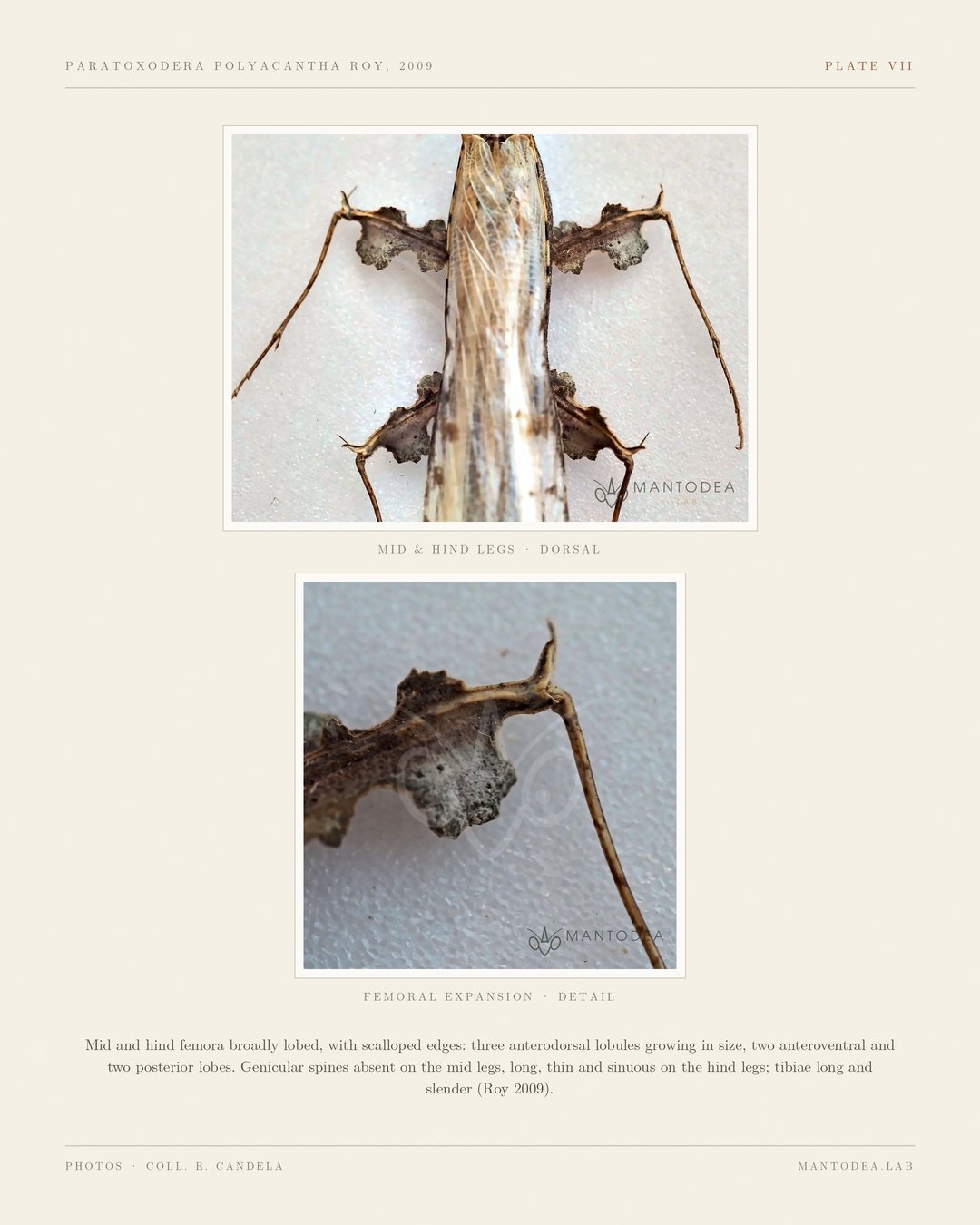
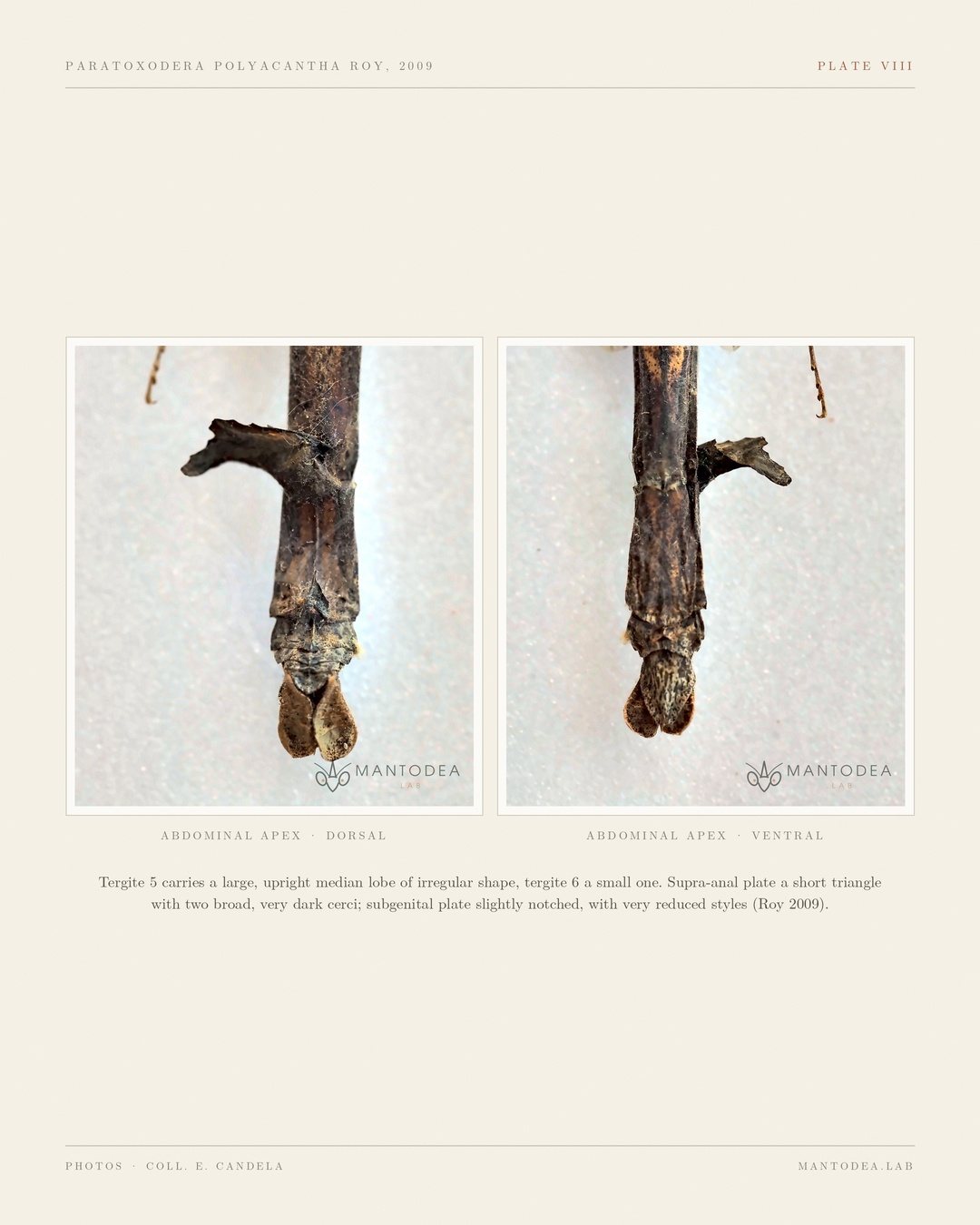
How to recognise it: eyes drawn out into long, thin points and a triangular expansion above the ocelli. The keel of the metazone bears three leaf-like lobes: the first, broad-based, ends in several points; the second, narrower, has two small points; the third curves forward like a sickle at the hind edge. Mid and hind femora are broadly lobed with scalloped edges; genicular spines are absent on the mid legs and long, thin and sinuous on the hind legs. Tergite 5 carries a large, upright median lobe of irregular shape, and sternites 3 and 4 have a pale pointed-arch spot.
Roy found it closest to P. gigliotosi, from which it differs in its larger size, longer pronotum, the several-pointed anterior lobe, smaller sternal lobes and narrower lobe on tergite 5. The male in these plates comes from my collection and was taken at Tanah Rata, Cameron Highlands, West Malaysia, in 2016.
Have you ever seen a female of P. polyacantha? Write to me at hola@mantodealab.com or on Instagram.
Plates
References
Photos and specimen: coll. E. Candela. Roy, R. (2009). Révision des Toxoderini sensu novo (Mantodea, Toxoderinae). Revue suisse de Zoologie 116(1): 93-183.
← Back to Mantodea.lab